
Garage Floors Built to Handle Impact and Chemical Exposure
Epoxy Flooring in Castle Rock for garages and basements that endure moisture infiltration, thermal cycling, and daily wear
Concrete surfaces in Front Range garages crack and spall when freeze-thaw moisture penetrates unprotected substrate, leaving rough surfaces that collect oil stains and dust. George Meyer Paint applies epoxy floor coatings across Castle Rock residential garages, basements, and commercial spaces, sealing concrete against moisture and creating abrasion-resistant surfaces that withstand chemical spills and heavy use. The coating process involves concrete surface assessment, substrate grinding or cleaning to open pores, epoxy primer application, topcoat layers, and managed curing timelines that determine final durability.
Epoxy flooring prevents the deterioration pattern common in untreated Castle Rock concrete—surface spalling from moisture that freezes beneath the slab, oil penetration that weakens concrete structure, and dust generation from abraded surfaces. Commercial facilities benefit from chemical resistance that protects floors from automotive fluids, cleaning agents, and salt tracked in during winter months.
Arrange an on-site consultation to review substrate condition and determine whether your concrete requires grinding or acid etching before epoxy application.
What Proper Substrate Preparation Requires
Epoxy bond strength depends entirely on concrete surface preparation—the substrate must be ground or chemically etched to remove laitance and open pores, cleaned of all oils and sealers that block adhesion, and dried completely before primer application. Skipping grinding on smooth-troweled concrete causes epoxy to peel within two to three years because the coating never achieved mechanical bond with the substrate.
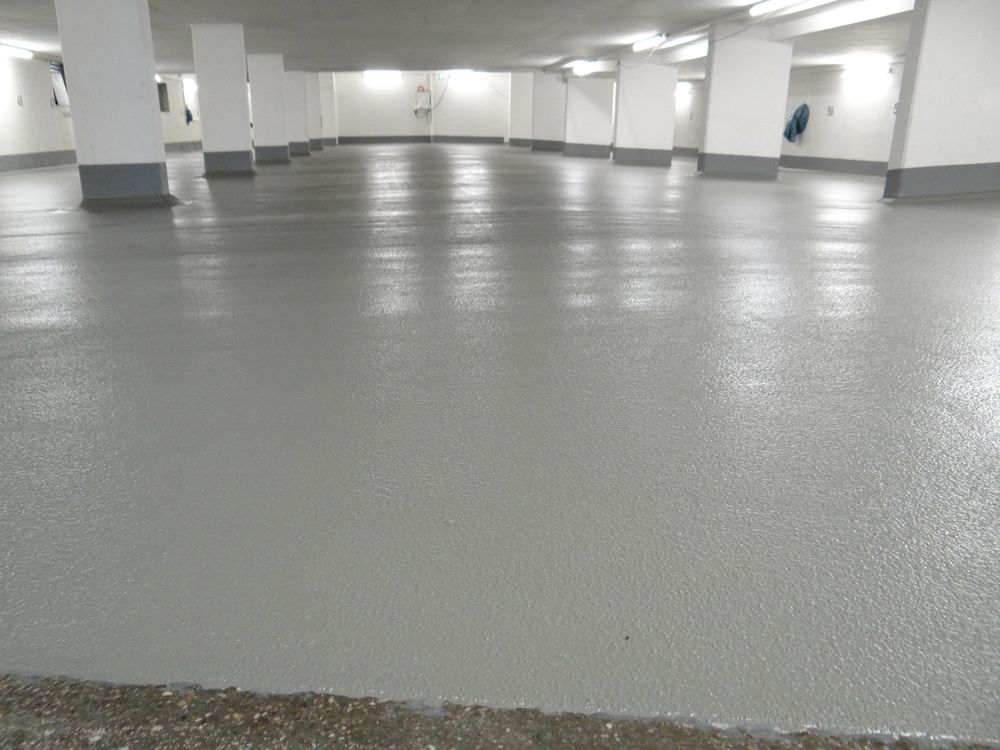
After epoxy cures, your garage floor shows a uniform gloss finish that resists hot tire pickup, sheds water and chemicals without staining, and eliminates the dust that untreated concrete sheds when abraded by foot traffic. The surface becomes cleanable with simple mopping rather than requiring pressure washing, and small impacts from dropped tools no longer chip or crater the floor.
Cure time varies with temperature and humidity—cooler Castle Rock basements require extended cure periods before the floor can bear weight or vehicle traffic. Rushing this timeline by driving on uncured epoxy compresses the coating before it hardens, creating permanent tire marks and reducing abrasion resistance across the entire surface.
Answers to Frequent Service Questions
Garage and basement owners often ask about preparation methods, cure timelines, and how epoxy performance compares to other concrete coatings available in the Castle Rock area.
What determines whether concrete needs grinding before epoxy?
Concrete poured with a smooth trowel finish or previously sealed with acrylic coatings requires mechanical grinding to expose aggregate and create the rough profile that epoxy resins need for chemical and mechanical bonding.
How long before I can park on new epoxy flooring?
Light foot traffic is safe after 24 hours in temperatures above 60 degrees, but vehicle traffic requires 72 hours minimum cure time to prevent tire marking and surface compression that creates permanent texture in uncured coating.
Why does some epoxy peel at the edges within a few years?
Peeling occurs when substrate prep was inadequate—either oils weren't fully removed, the concrete wasn't roughened enough for mechanical bond, or moisture vapor pressure from below pushed the coating off the slab.
What's the difference between epoxy and concrete paint?
Epoxy creates a chemical bond with concrete substrate through cross-linked polymer chains that penetrate open pores, while concrete paint sits on the surface and chips off under abrasion or impact because it lacks chemical adhesion.
Does epoxy work in Castle Rock basements with moisture issues?
Basements with active water seepage or high moisture vapor transmission require moisture mitigation systems before epoxy application, because hydrostatic pressure will push epoxy coatings off the substrate regardless of surface preparation quality.
George Meyer Paint grinds or cleans concrete properly before applying epoxy primer and topcoats, ensuring the bond strength that prevents early failure patterns seen when prep work is rushed. Contact our team to schedule a garage or basement floor coating consultation based on your current substrate condition.